

💫The Vision Behind the National Beekeeper Emergency Response Network
The Natural Beekeeper’s Path is a federally recognized 501(c)(3) nonprofit organization.
The idea for the National Beekeeper Emergency Response Network (nonprofit organization) was born out of necessity. On May 30th, 2025, a tragic accident in Lynden, Washington involving a semi-truck carrying over 300 beehives resulted in the loss and endangerment of an estimated 14 million honey bees (watch video below). The impact was devastating. As a treatment-free beekeeper, I saw firsthand the urgent need for a coordinated, prepared, and compassionate response system to such accidents.
Despite the well-meaning efforts of bystanders, there was no clear plan, no organized team ready to respond, and no centralized resource to call upon for help. It quickly became evident that without a national framework in place, many of these emergency situations would continue to result in preventable losses.
That experience catalyzed the formation of the National Beekeeper Emergency Response Network—a nationwide database of volunteer beekeepers who are willing and able to assist during beehive transport accidents or other emergencies. There is no certification or qualification required to join; all you need is a bee suit and the willingness to help save bees.
We envision this network as a decentralized but highly responsive system. When accidents occur, our goal is to rapidly mobilize local volunteer beekeepers who can respond in person or provide expert consultation remotely. The network also serves to raise awareness about the importance of honeybee welfare during commercial transport, and to provide ongoing education and support to responders.
🌟By bringing together beekeepers across the country, we aim to:
- Reduce the number of bees lost during accidents
- Provide emotional and logistical support to responders
- Ensure injured or stressed hives receive appropriate treatment or relocation
- Collaborate with first responders and local agencies
- Educate the public and policymakers about honeybee protection
The National Beekeeper Emergency Response Network is not just about reacting to disasters. It is about building resilience, preparedness, and a community that values and protects one of our planet’s most essential pollinators.
If you’re a beekeeper or someone who simply cares about our honeybee populations, we invite you to join us. Together, we can ensure that the next time disaster strikes, we’re not starting from scratch—we’re showing up ready.
Details & Video: 14 Million Honeybees – May 25, 2025 – 300 Beehive Truck Accident
May 30, 2025 – From Tragedy to Flight: A Beekeeper’s Unexpected Mission
On the morning of May 30th, 2025, I woke up expecting a fairly typical day. As a small business owner—running Mystical Wares, a metaphysical and crystal shop located in Mount Vernon, WA. But this day held something entirely unexpected. It turned into something unforgettable—a profound opportunity to give back to the bees.
News reached me that a semi-truck carrying over 300 honey bee hives had slid partially off a rural road. The incident caused the truck’s load—by some estimates, more than 14 million bees—to shift violently. As the trailer tipped and tilted, most of the hives fell off the side and into the brush that lined the roadside. The impact was enough to dislodge nearly all the hives, scattering and separating their carefully stacked boxes. This left thousands of colonies exposed, vulnerable, and in distress. The bees, including countless baby bees or brood, were suddenly laid bare to the elements, disoriented and in danger.
This was not just an accident—it was a moment of ecological urgency, and I knew immediately that I had to do something.
Shortly after arriving at my office inside Mystical Wares—I’m also a Certified Hypnotherapist—I received a message from my wife, Julissa. She had come across a Facebook post about the accident, describing the truck and the devastating loss and damage to the beehives. It wasn’t far from us—only about 45 minutes away.
Without hesitation, I picked up the phone and called the local sheriff’s department. I introduced myself not just as a concerned citizen, but as an organic, treatment-free beekeeper with experience in handling hives and honey bee emergencies. Just one week earlier, coinciding with World Bee Day, I had published a new book titled The Natural Beekeeper’s Path: Treatment-Free Practices for a Living World. To say the timing was synchronistic would be an understatement.
The call was brief but impactful. I offered my help and was quickly connected with someone at the scene of the accident to determine how I could be of assistance. The urgency in their voice was unmistakable. I was asked to grab my beekeeping suit and make my way there as soon as possible—they needed all the help they could get.
About an hour later, after gathering my suit and a few extras just in case others might need them, I arrived at the scene. Even as a seasoned beekeeper, I was in awe. The sheer number of bees in the air—loose, swarming, buzzing around the truck and the shattered remains of their hives—was staggering. It was like stepping into a cloud of wings and instinct.
Two other beekeepers were already suited up and working diligently to remove what was left of the hives still on the truck, the accident had happened the evening before and they’d been there since then. The semi had come to rest at an angle, its trailer leaning precariously into a ditch beside the road. Some hives remained barely balanced on the truck, while others had fallen beneath it or scattered down into the ditch, broken and exposed. Our first priority was to remove the remaining hives from the vehicle to stabilize the situation and eventually allow the truck to be safely towed. Only then could we begin the painstaking work of recovering the scattered colonies—some crushed, some open to the elements, all in need of help.
There was little time to waste; the sun would be setting in just a several hours. With nightfall came colder temperatures, and without the protection of their hives—open and scattered as they were—many of the bees wouldn’t survive. We had to act quickly and carefully, not only to preserve the living colonies but to protect the delicate brood who could not withstand exposure.
We worked tirelessly for hours, doing everything we could to stabilize the hives and move them to safety. Wearing full beekeeping suits in the sun while lifting and relocating hundreds of heavy boxes was physically grueling.
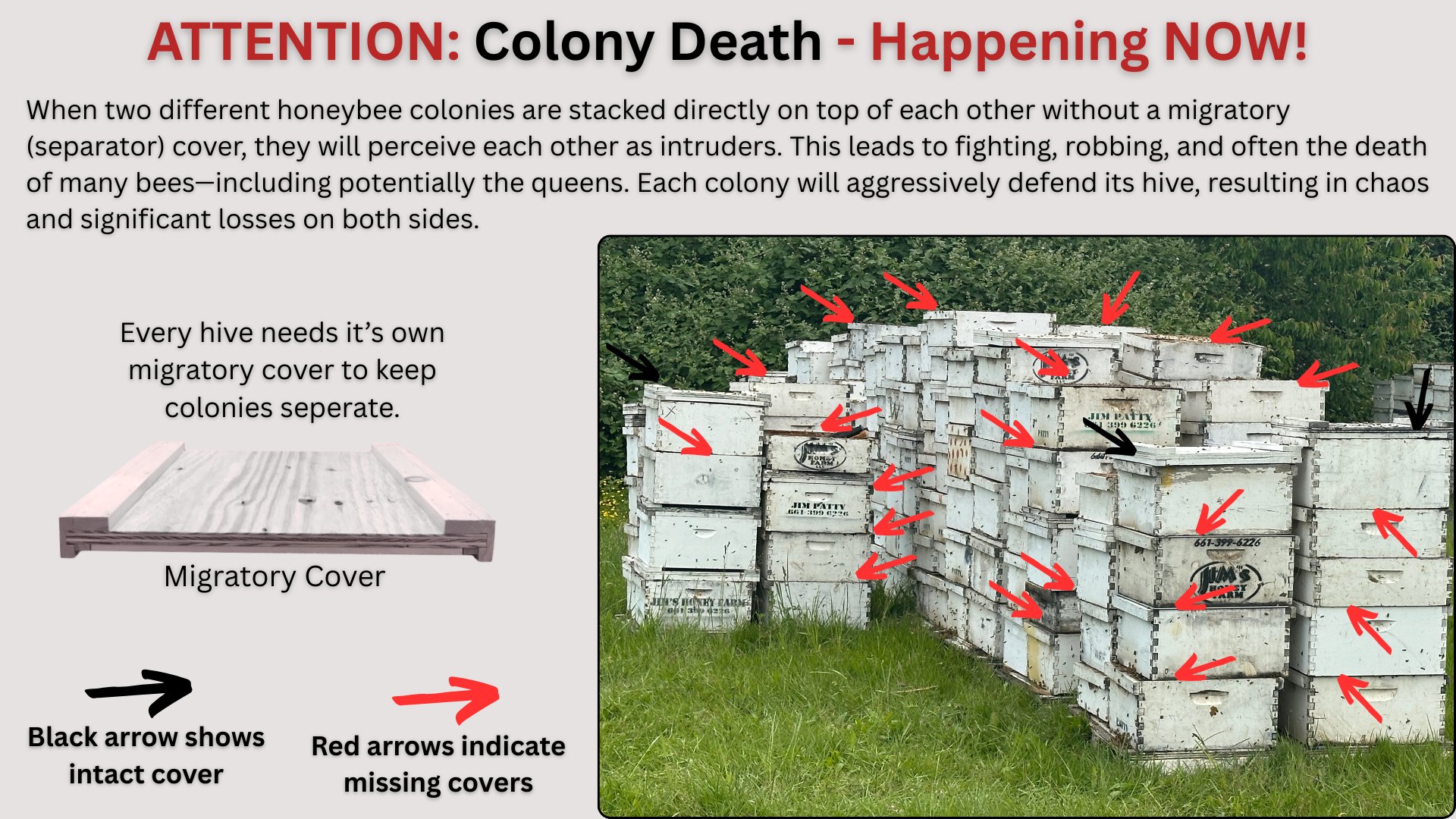
Together, we began stacking the salvaged hive boxes—some intact, many battered (there were many broken or damaged migratory covers) —onto pallets. We piled them as high as six feet, securing them carefully so a forklift could transport them farther away from the roadside, to safer ground. Eventually, with the immediate area around the truck cleared, we were able to remove the semi from its precarious position. This allowed us to finally reach the remaining hives buried beneath it and recover what we could. Sadly, in a situation like this, significant losses are inevitable. Millions of bees were lost that day—there’s no way around that hard truth.
But I try to focus on the lives we were able to save. I choose to hold onto the hope that many of the surviving bees will adapt and move forward. In the coming days, countless bees will likely swarm into the surrounding farmlands, searching for shelter and a new beginning. Because the accident left many of the hives jumbled, broken, and intermingled, it’s unlikely they’ll be re-collected and returned to their original configurations. But bees are resilient. Some will regroup, others will find refuge in nearby woods and begin anew. Nature, even in the face of trauma, holds a quiet wisdom for healing. Still, as stewards of these sacred beings, we have a responsibility—a duty—to rise beyond complacency. We must do more to ensure that tragedies like this are prevented in the future. – Derek Condit
When different honeybee colonies are stacked directly on top of one another without proper migratory (separator) covers, they perceive each other as intruders. This results in intense fighting, robbing, and often the death of countless bees—including their queens. Each colony instinctively defends its own, leading to chaos, confusion, and significant losses on both sides.
I recently spoke with a representative from Washington State’s Department of Agriculture; in short, any regulatory authority they once had in situations like this is no longer in place, meaning there is nothing they can do to intervene. While it’s understandable that not all hives could be properly reassembled during the initial recovery, efforts could have been made—and were offered—in the following days to place migratory covers on the hives, giving them at least a chance of survival.
Now, it’s up to each person reading this to decide if they’d like to do their part to help save the bees. Share this website’s link to any and all news organizations worldwide. Our honeybee populations are a global concern. Possibly, by bringing more attention to these devastating losses—many of which could have been prevented—some good can come from all this devastation.
Note: As a beekeeper, I know very well how devastating it is for colonies to be stacked on top of each other without lids or any barriers between them. In that situation, the individual hives are no longer sealed units. With open brood boxes stacked directly on top of one another, bees from different colonies are forced into direct contact. This almost always leads to fighting, as each colony instinctively defends its own resources, queen, and brood.
Without the separation normally provided by hive components like inner covers or lids, bees from different colonies will begin to kill each other in confusion and territorial aggression. Even worse, any uncapped brood—developing larvae and pupae—becomes vulnerable. These young bees are defenseless and can be torn apart in the chaos. Queens can also be attacked or lost in the fray, further dooming the colony.
Given the severity of this situation, I would honestly be surprised if any of the colonies that were stacked in this way survived. That said, I do not have direct or specific information—this is my opinion based on years of experience and an understanding of bee behavior
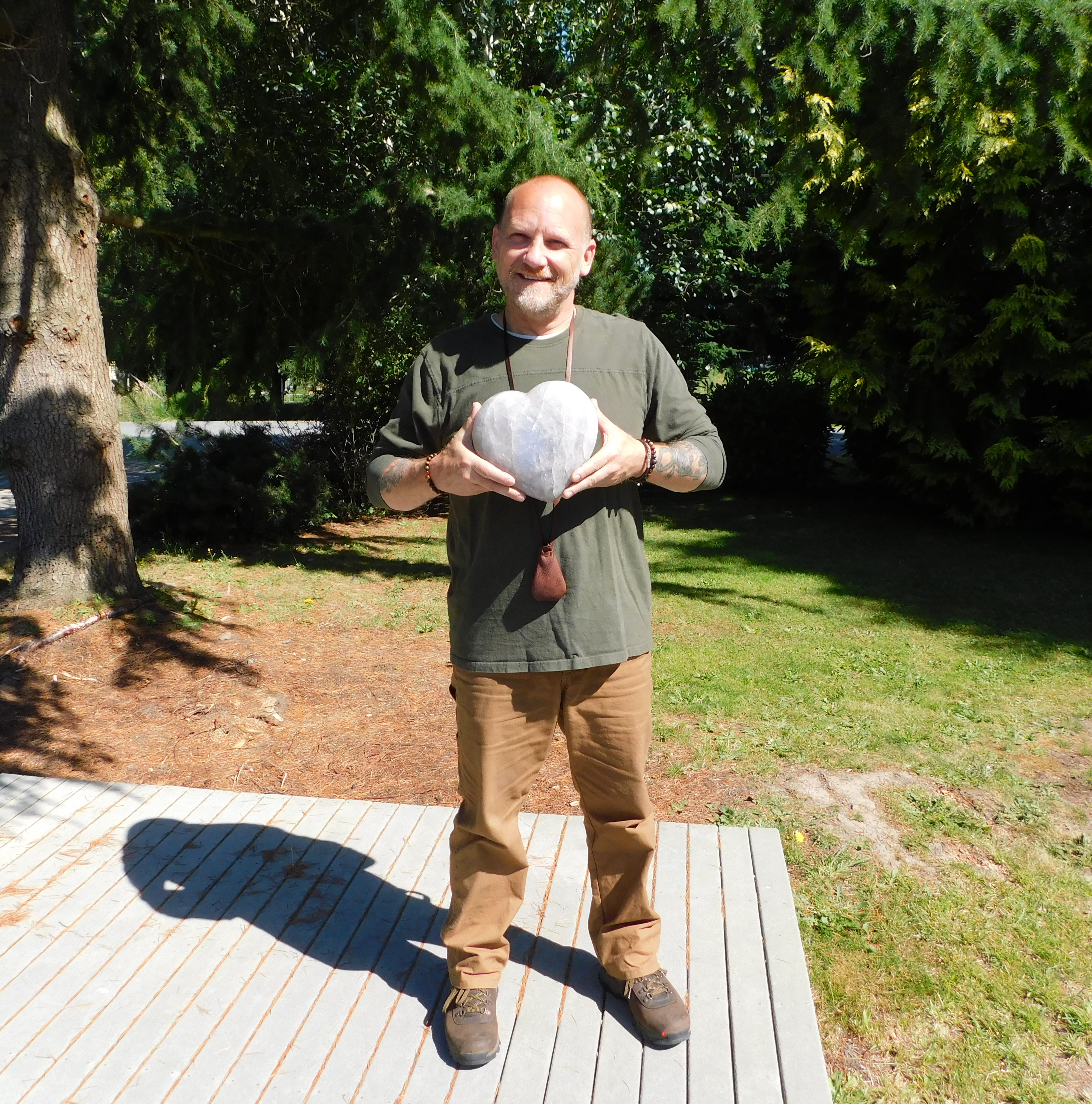
Founder: Derek Condit (Bio)
🐝The Natural Beekeeper’s Path began as a book—now freely available online for download and sharing—but has since evolved into a nationwide honeybee-saving mission & nonprofit organization, that now serves as the central hub for the National Beekeeper Emergency Network and the National Beekeeper Emergency Response Plan—initiatives developed to assist in emergencies involving bees and beehive transport accidents across the country.
A Certified Hypnotherapist, Treatment-Free Beekeeper, and founder of the Shungite Beehives, Derek offers innovative insights and nature-aligned practices that support the health and sovereignty of honeybee colonies without resorting to chemicals or synthetic treatments. His methods draw from both scientific understanding and energetic awareness. By incorporating Shungite, medicinal mushrooms, mineral supplementation, and vibrational support, Derek has created a unique and evolving system of beekeeping that honors the hive as a living superorganism. Schedule a online or in-person session – Click-Here
He regularly teaches beekeeping classes and leads hands-on workshops, helping others deepen their relationship with bees through experiential learning. Derek also produces online educational materials to make treatment-free beekeeping accessible to a global audience. For over five years, he has freely gifted Shungite nuggets and powder to beekeepers worldwide, encouraging experimentation and collaboration in the pursuit of healthier, more resilient hives. This offering reflects his core belief: that when we share openly and give generously, we elevate collective consciousness and mutual stewardship. Learn more & get your 🌟FREE Shungite Bee Kit: Click-Here
Derek is also the owner of 💫CosmicShungite.com, an online Shungite store, education center, and rock & crystal shop with a growing global online reach, including an active podcast.
Through The Natural Beekeeper’s Path, Derek invites you to step into a more conscious and collaborative relationship with bees. It’s a path that asks us to slow down, observe, listen, and respond in kind. In doing so, we not only support pollinators, but also rediscover ancient ways of being that are grounded in trust, reciprocity, and reverence for the natural world.
📄The Natural Beekeeper’s Path Nonprofit: UBI Number: 605 911 658
📄WA State Articles of Incorporation: – Click-Here
📄The Natural Beekeeper’s Path Nonprofit: U.S. Federal Dept of Treasury: EIN #39-26054
📄U.S. Federal 501(c)(3) status letter: – Click-Here
📄IRS EIN # Assignment Documents: – Click-Here
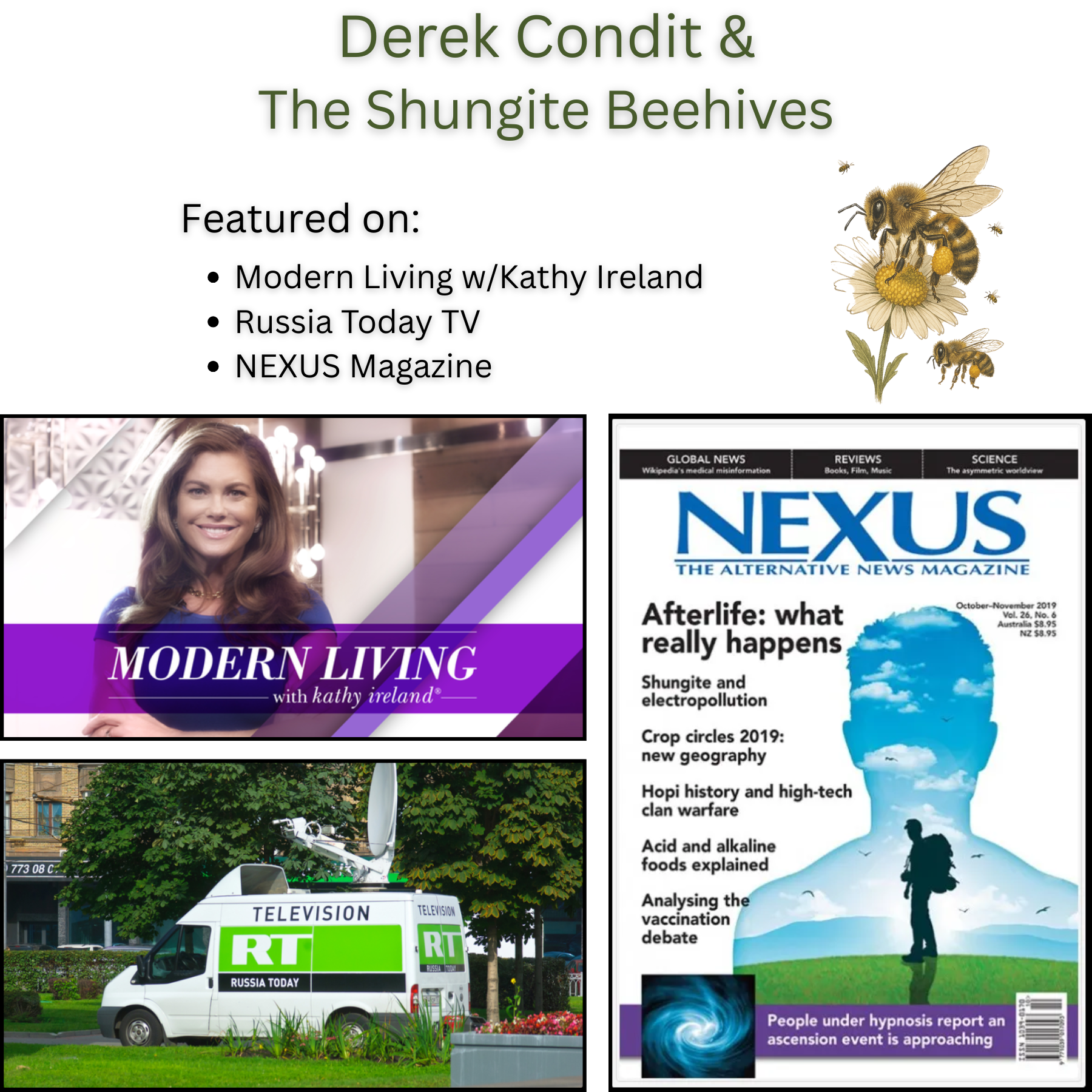
Click-Here – Russia Today TV Interview
Shungite Beehives (FAQ)
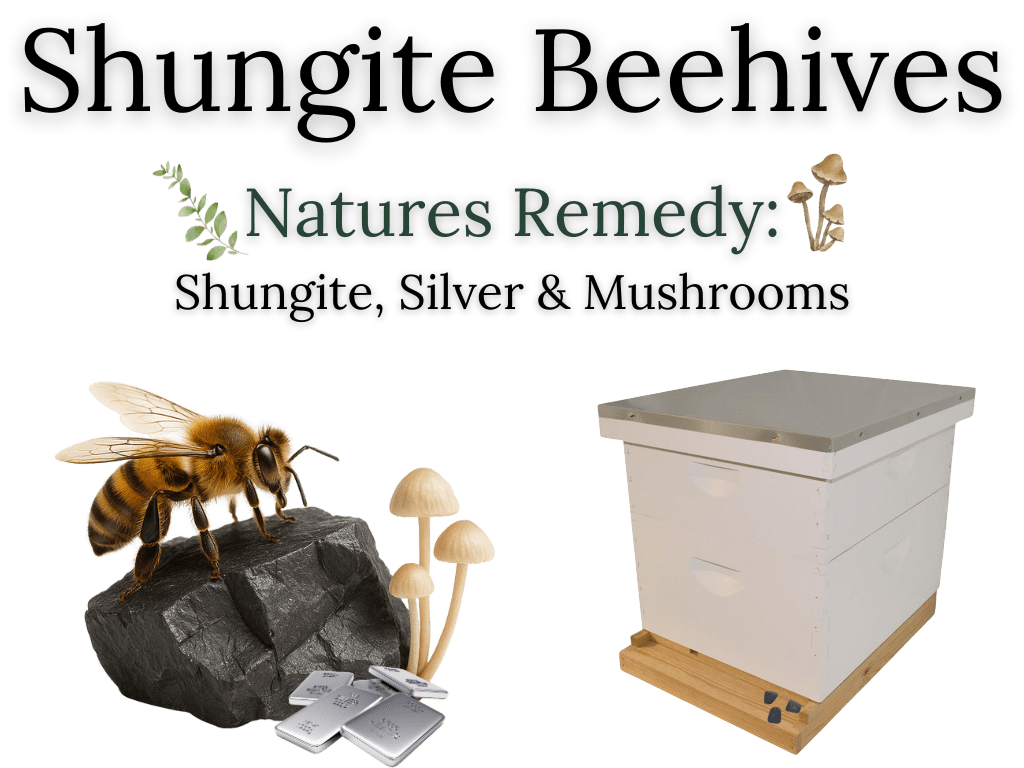
In 2017, Derek embarked on an innovative and pioneering endeavor known as the Shungite Beehive Project, merging his extensive knowledge of treatment-free beekeeping with the distinctive energetic properties of Shungite. His goal was to explore and implement natural methods to enhance hive resilience, support pollinator health, and counteract environmental stressors affecting bee populations worldwide. Recognizing the urgent need to address colony decline, Derek integrated Shungite into hive structures as a potential solution to mitigate the effects of non-biocompatible frequencies.
Shungite, a rare carbon-based mineral known for its high conductivity and unique molecular structure (aka Fullerene, Bucky Ball, C60 molecule), has long been studied for its ability to interact with various energy fields. It has been shown to neutralize or harmonize disruptive frequencies emitted by modern technology, such as cell phones, cell towers, Wi-Fi routers, and radio antennas, which have been linked to stress responses in bees and other wildlife. (click-here to view over 90 scientific studies) By incorporating Shungite strategically within the hive environment, Derek sought to create a protective energetic barrier that could help reduce electromagnetic stressors and promote a more harmonious internal environment for the bees.
His approach included:
- Placing Shungite-infused paint on the exterior of the beehives to establish a protective field around the colony.
- Embedding Shungite pieces at the hive entrance to serve as a grounding mechanism, potentially helping the bees discharge built-up energetic interference.
- Spreading Shungite nuggets or Shungite powder under beehives to help dissipate ‘stray currants or stray voltage‘
- Observing behavioral changes and hive health improvements in colonies exposed to this method.
Stray Currents Overview:
Stray currents, also referred to as ground currents, are unintended electrical currents that travel through the earth. These often originate from man-made sources and can have significant environmental and biological impacts.
Common Sources:
- Electrical distribution systems
- Faulty grounding in power grids
- Induced electromagnetic fields (EMFs) from high-voltage transmission lines
These currents can permeate soil, water, and infrastructure, leading to unintended electrical exposure for living systems, including pollinators like honeybees.
Alternative Terminology:
- Ground Currents
- Earth Currents
- Man-made Electrical Interference
- Anthropogenic Electromagnetic Currents
- Induced Earth Charge
- Electro-pollution
Each of these terms reflects a slightly different emphasis—whether the source is human-caused, electromagnetic in nature, or focused on earth/ground conduction.
These currents are increasingly being studied in the context of EMF pollution and its effects on ecosystems, especially sensitive ones like honeybee colonies.
Derek has openly shared his experiences and findings through videos, photographs, interviews, and podcasts, reaching a global audience of beekeepers, researchers, and environmentally conscious individuals. His work has contributed to an ongoing conversation about the role of energetic influences on pollinator health and has inspired others to explore alternative, holistic approaches to supporting bees in an era of increasing technological interference.
By integrating Shungite with natural, treatment-free beekeeping practices, Derek continues to advocate for sustainable and innovative solutions to help safeguard one of the planet’s most vital pollinators.
📄To read the full description & receive your Free Shungite Bee Kit, visit our Shungite Beehives webpage: Click-Here
How-To Build a Shungite Beehive
🐝Start a new beehive or transform any beehive into a Shungite Beehive.
Any type of beehive can be converted into a Shungite Beehive, incorporating the protective and grounding properties of Shungite to create an energetically harmonious environment for bees. For this guide, we will focus on the Langstroth beehive setup, but the principles can be adapted for other hive designs.
While not all steps are required in every case, we recommend following these guidelines as closely as possible to achieve the most optimal results. If you are working with a previously used beehive, you can apply Shungite-infused paint over existing coatings, provided they are non-toxic.
Step 1: Selecting a Hive & Preparing the Surface
- Begin with a new beehive that has not been treated with chemical sealants, synthetic paints, or pesticides. This ensures the bees are not exposed to harmful residues.
- If using a pre-owned hive, lightly sand the exterior to remove loose paint or contaminants before applying Shungite Paint.
Step 2: Applying Shungite Paint to the Exterior
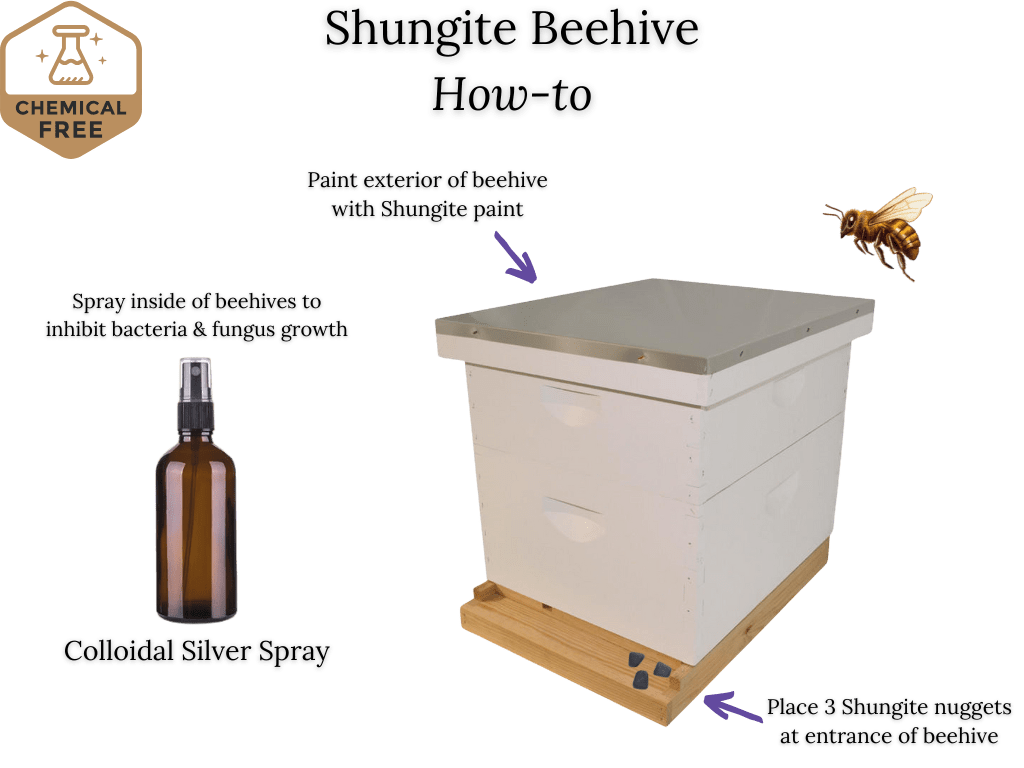
- Coat the entire exterior surface of the beehive with Shungite-infused paint. (Shungite powder to mix into your own paint can be purchased here: click-here)
- Shungite’s high carbon content and fullerenes allow it to interact with various energy fields, potentially helping mitigate the impact of harmful electromagnetic frequencies from sources like cell towers, Wi-Fi routers, and radio signals.
- Allow the first coat to dry completely before applying an additional layer for enhanced protection and longevity.
Step 3: Treating the Hive Interior with Colloidal Silver
- Before introducing bees, generously spray the inside of all hive boxes with colloidal silver (15ppm or higher).
- Allow the hive components to dry completely, and repeat if a more thorough saturation is desired.
- The presence of silver particles inside the hive may help inhibit harmful bacterial and fungal growth, including:
- Chalkbrood disease
- Stonebrood disease
- American foulbrood
- European foulbrood
Colloidal silver has been recognized for its antimicrobial properties, supporting the hive’s overall health by reducing the likelihood of pathogenic outbreaks that could weaken or destroy a colony.
Additional Enhancements (Optional but Recommended)
- Embedding Shungite at the Hive Entrance
- Placing Shungite stones at the hive entrance may act as a grounding mechanism, helping bees discharge built-up static or disruptive energy.
- Observations suggest that bees frequently interact with Shungite, which could indicate an energetic affinity beneficial to their well-being.
- Integrating Shungite Powder into the Inner Hive Environment
- Lightly dusting Shungite powder inside corners or crevices of the hive boxes may further enhance the hive’s protective energy field.
- Ensure any application does not interfere with hive ventilation or bees’ natural movement patterns.
By following these steps, beekeepers can holistically enhance their hives with the grounding, protective, and antimicrobial properties of Shungite and colloidal silver, creating an environment that fosters stronger, healthier colonies in a world of increasing environmental stressors.
🐝Learn more about the Shungite Beehives: Click-Here
 The Natural Beekeeper's Path Nonprofit